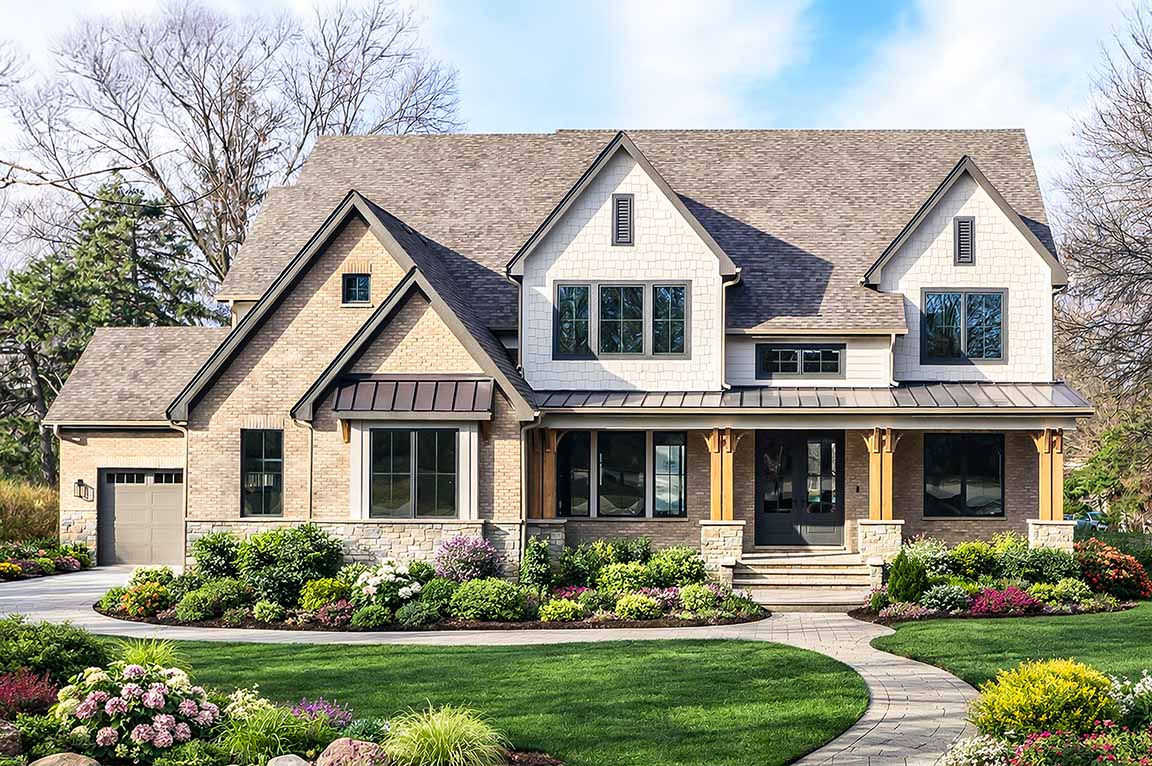
Gridded Wood Windows Bring Architectural Rhythm to a Naperville Custom Home
A whole-home new construction window and patio door package designed around symmetry, repetition and bold framed sightlines.

Project Details:
Project Type:
Location:
Naperville, IL
Area of Home:
Entire Home
Products Used:
Some custom homes are defined by a single dramatic feature. This Naperville new construction home is defined by repetition.
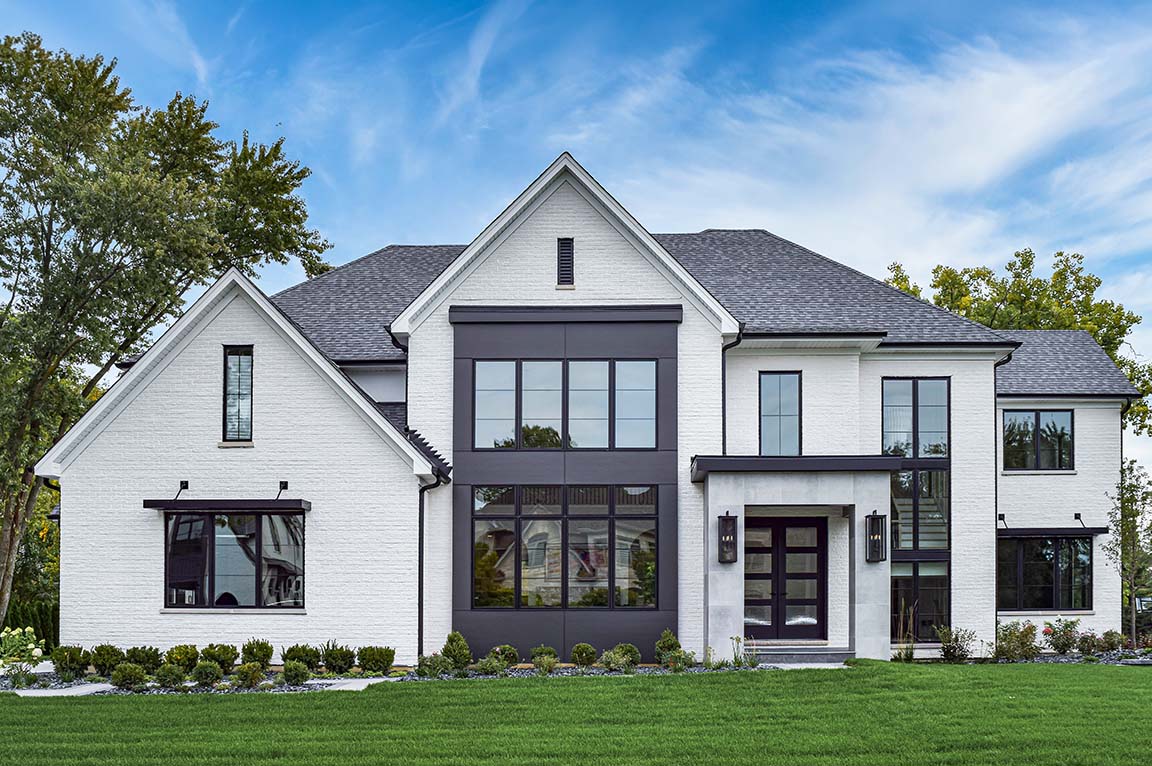
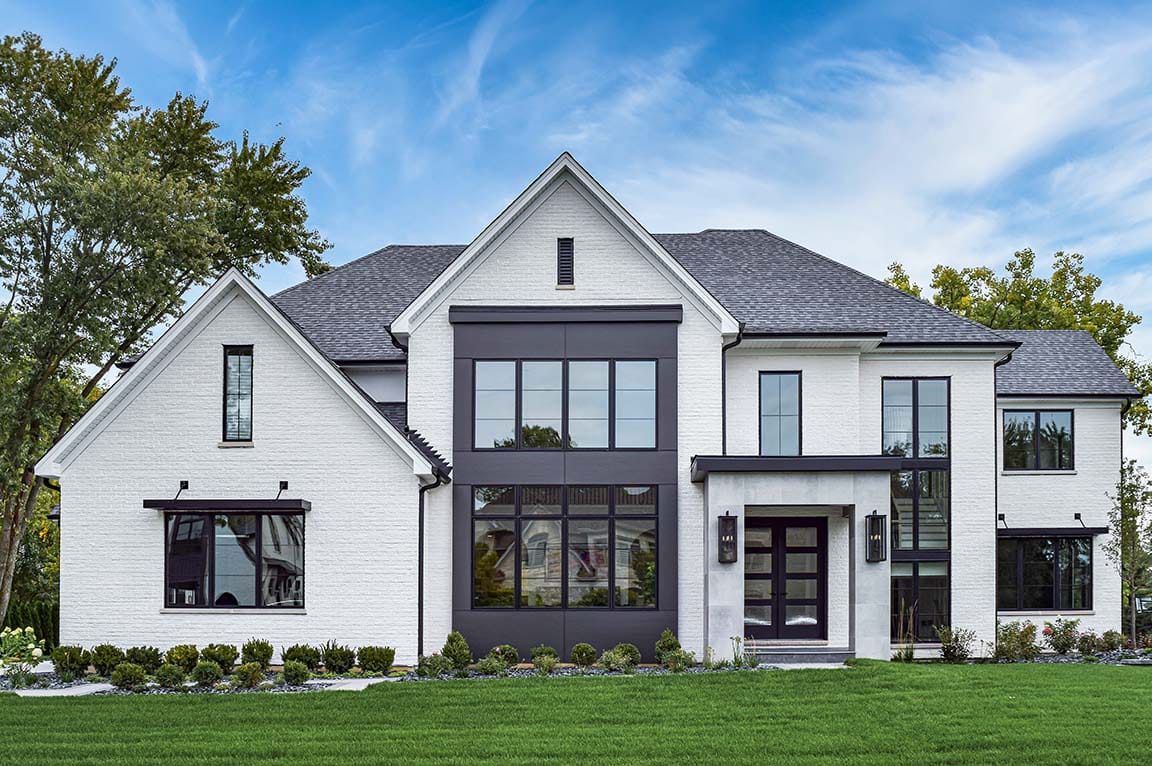
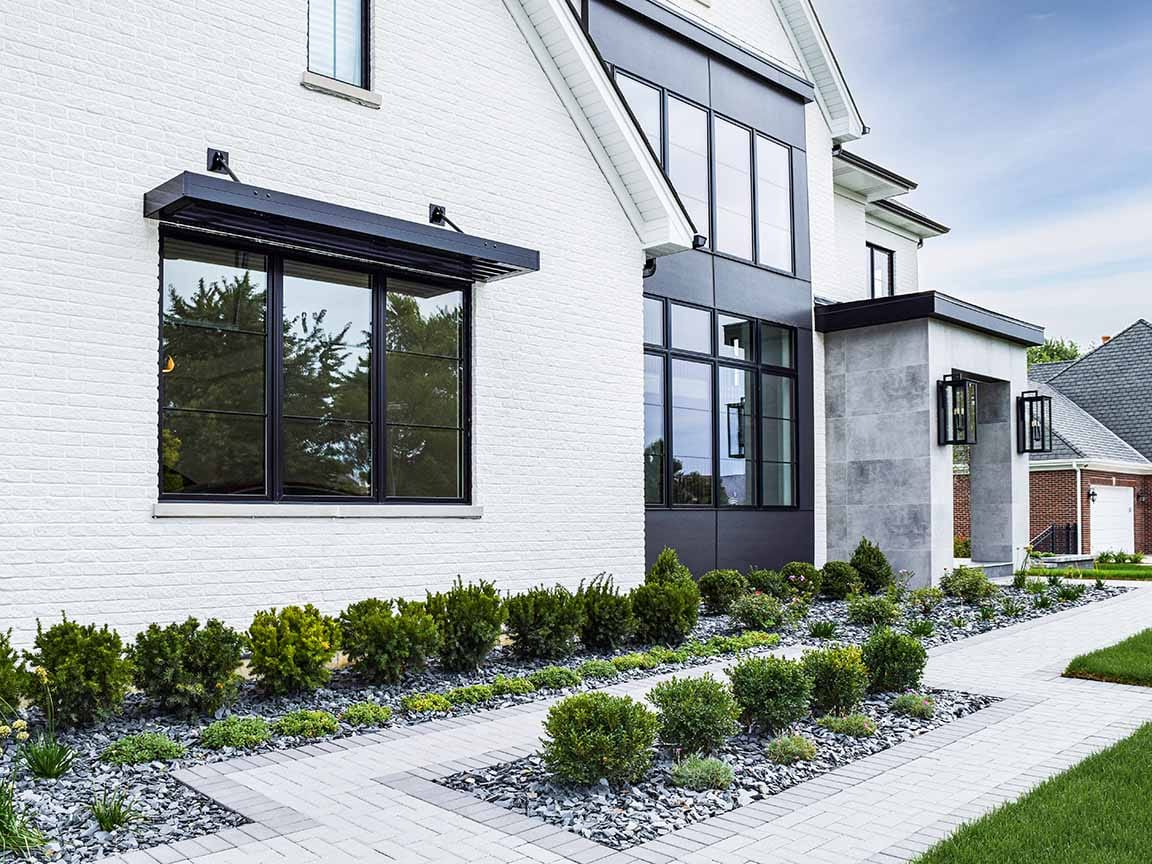
From the street, the eye immediately catches the disciplined use of divided-light window patterns repeated across the façade—from the study window on the left side of the home to the tall foyer glass, upper-level picture windows and the large stacked central window wall. The result is a home that feels ordered, architectural and intentionally composed rather than simply window-filled.
Because every opening was selected during the design phase, the homeowners were able to use the window package as part of the home’s geometry. The repeated grille lines create a visual rhythm that moves across the entire white brick elevation, while the black-clad wood frames sharpen each opening into a strong architectural element.
Stacked Window Walls Add Height Without Changing the Roofline
The most distinctive feature of this home is the large, stacked glass section centered on the front elevation.
Rather than relying on oversized specialty shapes or dramatic roof peaks, the design creates height through a two-level window composition. Large fixed and operable units on the main level are echoed by a matching row of fixed windows above, drawing the eye upward and giving the center mass of the home a gallery-like presence.
This is a smart design strategy for homeowners who want a tall, custom feel without overcomplicating the roof structure. The vertical repetition of glass does the architectural work, helping the façade feel expansive and elevated from the curb.
Repeated Grille Patterns Keep a Wide Front Elevation Cohesive
Wide custom homes can sometimes feel visually disconnected, especially when the window types shift from room to room.
Here, the consistent grille pattern solves that challenge beautifully.
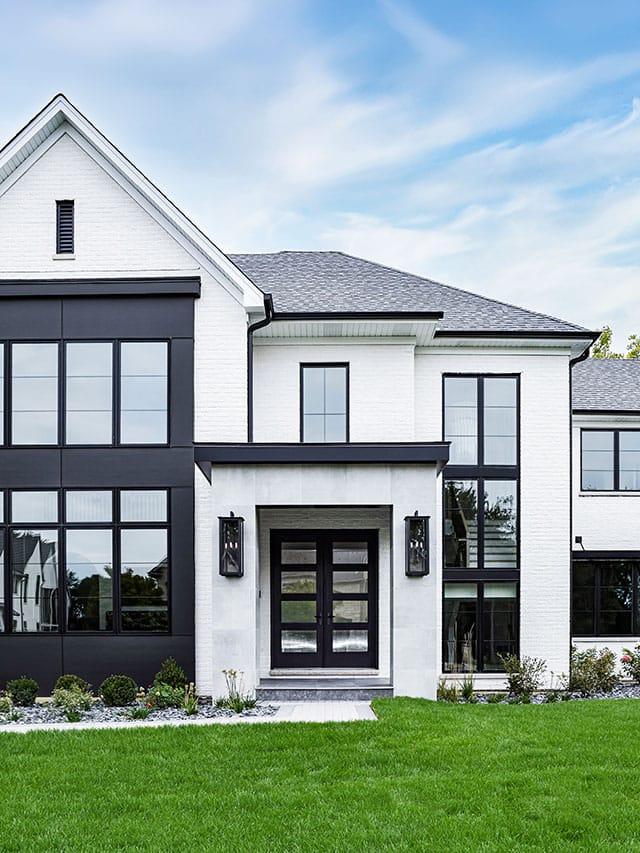
Traditional 3/4-inch grilles-between-the-glass were repeated across study windows, bedroom windows, foyer openings and the upper great room units. This creates a shared visual language across spaces that serve completely different purposes.
For homeowners, this kind of repetition matters because it makes the architecture feel calmer and more intentional. Even though the home uses casements, fixed sash sets and large mulled groupings, the repeated grille pattern ties the whole façade together.
Black-Stained Wood Interiors Turn the Windows into Design Features
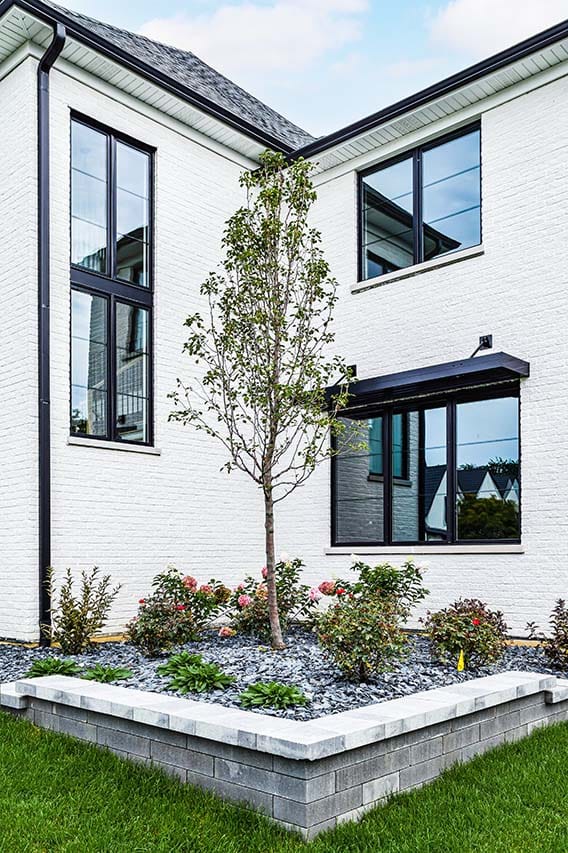
What makes this project especially different from many new builds is that the bold window framing continues inside the home.
The homeowners selected black-stained wood interiors throughout the package, allowing the windows to function almost like framed architectural details within each room.
This is especially impactful in tall transition spaces like the foyer and stair landing, where the windows help define vertical volume. Instead of disappearing into drywall, the dark wood interiors give each opening weight and presence.
For homeowners considering darker interiors, wood is an especially smart choice because it brings texture and depth that keeps the look sophisticated rather than stark.
A Square Sliding Patio Door Keeps the Rear Elevation Balanced
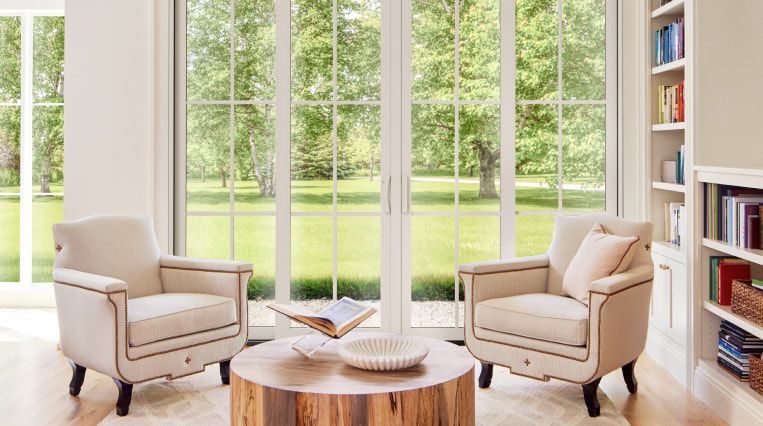
At the rear sunroom, the nearly square sliding patio door introduces a different but equally intentional design move.
Its proportions closely mirror the nearby window groupings, which helps the rear elevation feel as composed as the front of the home. This is one of the reasons the project feels so architecturally consistent—openings are scaled in relationship to one another rather than chosen independently.
For homeowners designing sunrooms or rear entertaining spaces, this is a useful takeaway: when the patio door echoes the size and proportion of adjacent windows, the whole elevation feels more cohesive.
Whole-Home Windows Designed as an Architectural System
What makes this project stand apart is that the windows were not selected as individual room decisions. They were treated as a system.
The front study windows establish the grille rhythm. The stacked center glass builds height. The foyer and stair windows extend vertical movement. Rear living spaces use similarly disciplined proportions. Even smaller utility spaces maintain the same frame finish and design logic.
For homeowners planning a custom home, this project is a strong example of how windows can help organize the entire architecture—creating order, proportion and visual flow long before furniture or finishes are added.
Thinking about next steps?
Whether you’re exploring ideas or ready to talk details, we’re here to help. Schedule a consultation—or sign up for inspiration and real-home insights from Pella.