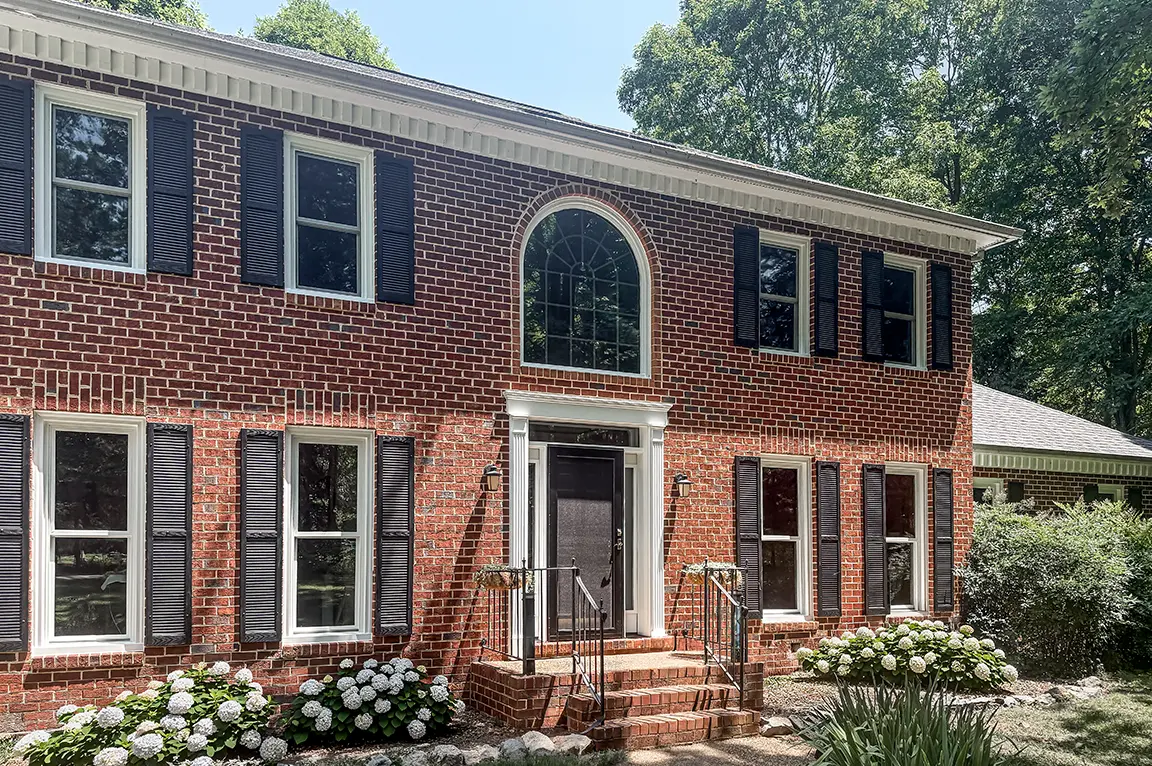
Double-Hung Replacement Windows Restore Comfort and Character to a 1931 Charlottesville Home
Cracked, drafty original windows are replaced with white double-hung windows that keep the traditional grille pattern of this stucco home.

3 min read
Project Details
Type:
Location:
Charlottesville, VAArea of Home:
Entire Home
Age of Home:
1931
Products Used:
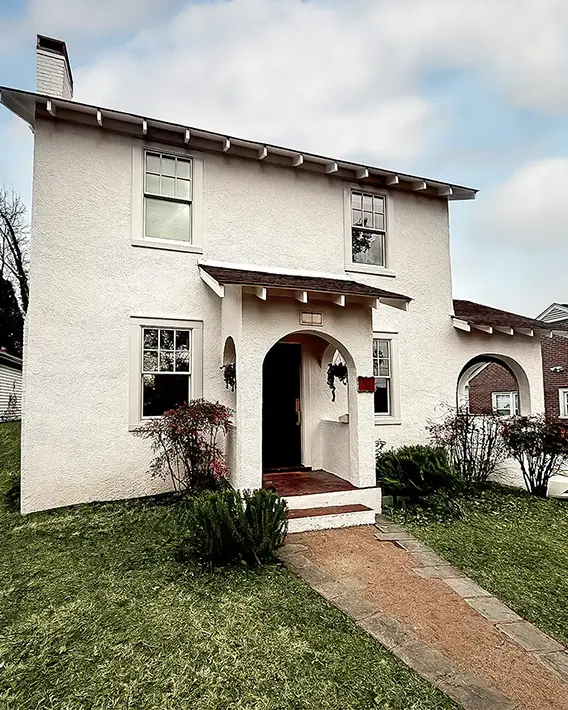
Built in 1931, this stucco home in Charlottesville has arched porches, exposed rafter tails and divided-lite windows on both floors. After nearly a century, many of those windows were cracked or rotting, and gaps around the frames let drafts and weather inside. The homeowners’ priority was better energy efficiency, with new windows that still suited the age and style of the house.
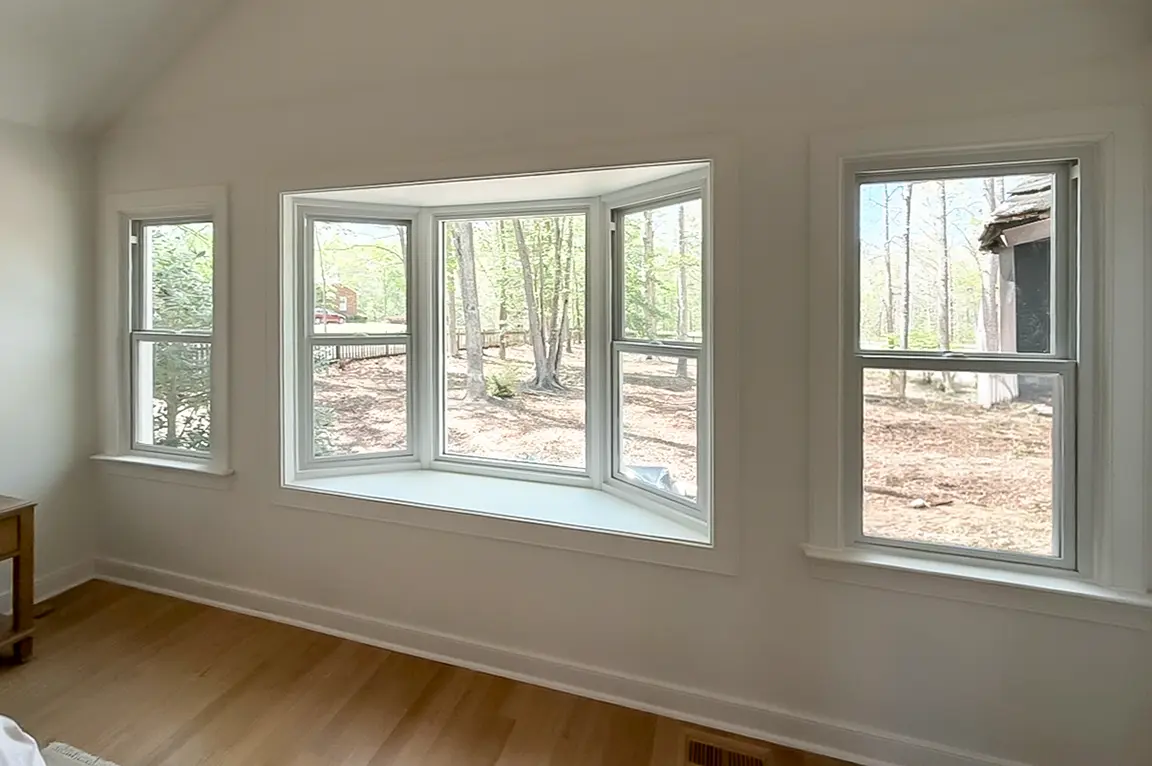
Working with Pella Virginia, the homeowners replaced all 20 windows in the home with Pella® Lifestyle Series double-hung windows, finished white inside and out with grilles in a traditional pattern.
Pocket Window Installation Preserves the Original Interior Trim
The new windows were installed using the pocket method. The old sashes and tracks were removed, and each new double-hung window was set into the existing frame. Because the original frames stayed in place, the home’s interior trim was left undisturbed, preserving woodwork that has been part of the house since it was built.
Outside, the weathered wood trim around each window was wrapped in white aluminum to match the new frames. The before and after photos show the difference: peeling, worn trim is now covered with a clean, crisp finish that doesn’t need to be scraped and repainted.
Lead-Safe Work Practices for an Older Home
Energy-Efficient Double-Hung Windows with Low-E Glass
Energy efficiency was the main goal, and it started with the glass. Every window uses insulated Advanced Low-E glass with argon gas sealed between the panes, designed to help keep heat inside in winter and outside in summer. Cam-action locks draw the sashes together as they close for a tighter seal against drafts, and sash lifts make the lower sash easy to raise.
Several rooms also needed specialty glass. The windows at both stair landings and in the upstairs bathroom use tempered glass, which is designed to break into small, less sharp pieces and is often required by code in those locations. One bathroom window pairs tempered glass with obscure glass that lets light in while blocking the view for privacy.
Traditional Grilles and White Finishes Keep the Home’s Character
Better Energy Efficiency and Curb Appeal for a 1931 Home
The cracked, rotting windows and drafty gaps are gone, replaced with energy-efficient double-hung windows that keep the traditional character of the house. From the street, white frames and freshly wrapped trim give the stucco exterior a cleaner look, while inside, the original trim remains in place around every new window.
Thinking about next steps?
Whether you’re exploring ideas or ready to talk details, we’re here to help. Schedule a consultation—or sign up for inspiration and real-home insights from Pella.