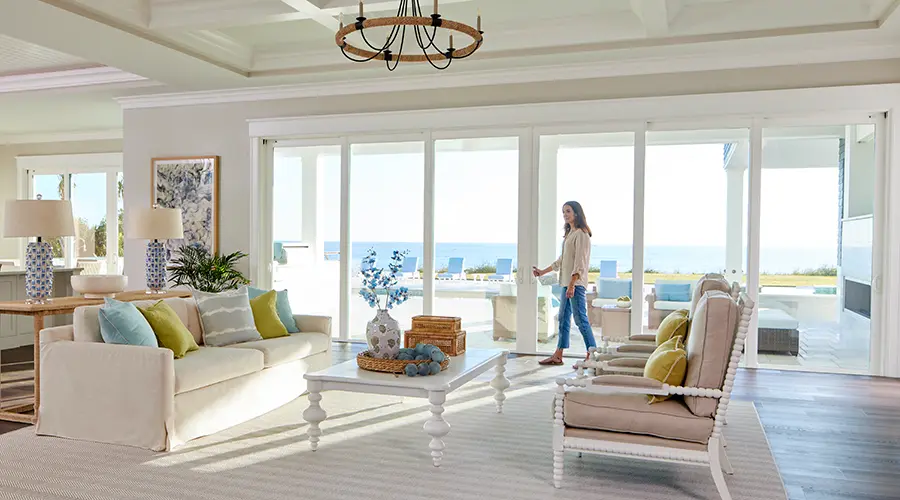
Hurricane Impact Windows in Jacksonville, FL

ByPella Corporation
Updated 10/8/2026
7 min read
THE SHORT VERSION
Whether Jacksonville homes need impact windows depends on their location. Duval County's coastal areas, including Atlantic Beach, Neptune Beach, Jacksonville Beach and Mayport, fall within the Wind-Borne Debris Region and require impact-rated glazing or approved storm shutters. Many inland areas of Jacksonville do not have the same requirement.
Jacksonville faces a real hurricane risk, though it is generally lower than in South Florida. Historically, some of the city's most significant hurricane-related damage has come from flooding rather than extreme wind. Hurricane Irma (2017) caused the worst flooding in Jacksonville's recorded history.
Impact windows are designed to help protect your home from high winds and wind-borne debris, not rising floodwaters. In Jacksonville, where both wind and flooding can be hurricane concerns, understanding that distinction is important.
Do Jacksonville Homes Need Hurricane Windows?
It depends on where you live in Jacksonville. For example, many homes in Duval County's coastal communities of Atlantic Beach, Neptune Beach, Jacksonville Beach and Mayport are located within the Wind-Borne Debris Region (WBDR). For new construction and qualifying replacement projects, building codes in these areas require impact-rated windows or approved storm shutters.
Much of Jacksonville's inland area has lower design wind speeds and falls outside the WBDR, meaning impact windows are often not required by code.
The honest answer comes down to location: at the beaches, usually yes; inland, often no. Even so, inland homes remain vulnerable to hurricane impacts. Jacksonville's hurricane risk is generally lower than that of South Florida or many Gulf Coast communities, and the area's historical hurricane-related threats came more from flooding than from extreme wind.
Jacksonville Hurricane Windows at a Glance
| Required by code? | On the coastal strip / beaches (WBDR): Yes. On the mainland: Often no, but still exposed. |
| Design wind speed | Roughly 130 to 140 mph near the coast, lower inland. |
| Product approval needed | Florida Product Approval (statewide). A Miami-Dade NOA is not required. |
| HVHZ? | No. Jacksonville is not in the High-Velocity Hurricane Zone (Miami-Dade and Broward Counties only). |
| Permitting | Consolidated city-county division for most of Jacksonville; beach municipalities permit separately. |
| Hurricane threat | Flooding and storm surge (Irma in 2017 set records), plus wind on the coast (Matthew in 2016). |
| Do they stop flooding? | No. Impact windows help protect against wind and wind-borne debris only. |
| Best-fit Pella products | Depending on project requirements, Pella® Defender Series™ may be an appropriate impact-resistant window option. Verify code requirements and product approvals for your specific location. |
Does Jacksonville Get Hurricanes?
Yes, though less often and generally less severely than in South Florida. Jacksonville's most significant hurricane-related damage has historically come from water rather than wind. By one count, only about five major hurricanes have significantly affected Duval County since 1880, but the area is brushed by or directly affected by a tropical system roughly every two years.
Hurricane Irma in 2017 is the defining modern storm. According to NOAA's National Hurricane Center, Irma caused the worst flooding in Jacksonville's recorded history. NOAA and National Weather Service reports showed that water levels in downtown Jacksonville exceeded the previous record set during Hurricane Dora in 1965. The St. Johns River reached historic levels, hundreds of residents required rescue, and floodwaters reached approximately five feet deep in some downtown areas.
Hurricane Matthew in 2016 highlighted the region's wind and coastal risks. Its western eyewall tracked just offshore, bringing winds up to Category 2 strength. The storm damaged the Jacksonville Beach Pier, caused widespread power outages, toppled trees and accelerated beach erosion.
Together, these storms illustrate Jacksonville's hurricane profile: coastal areas face wind, surge and erosion risks, while inland areas are often more vulnerable to flooding from storm surge and rising river levels. For many homeowners, water poses the greatest hurricane threat.
What Are Jacksonville's Building Code Requirements for Impact Windows?
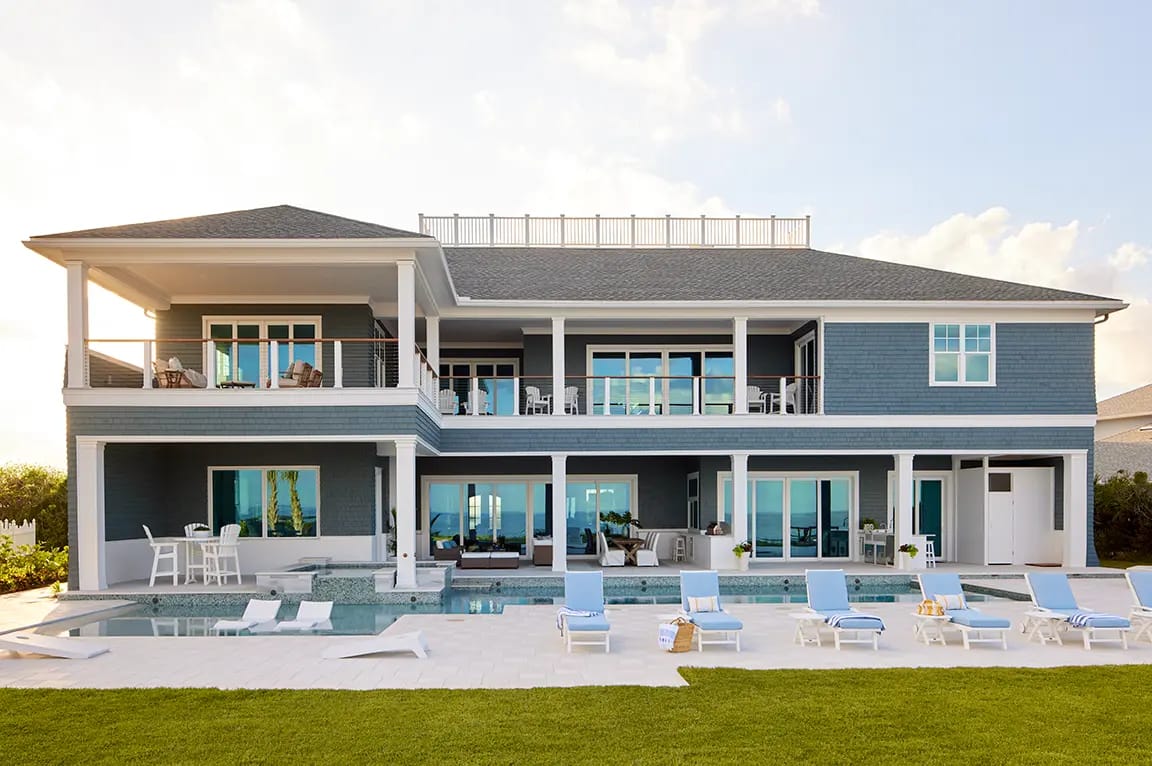
Jacksonville's requirements differ between coastal and inland areas. For example, Duval County's coastal communities, including Atlantic Beach, Neptune Beach, Jacksonville Beach and Mayport, are located within the Wind-Borne Debris Region (WBDR). In those areas, new construction and qualifying replacement projects must use impact-rated glazing or approved storm shutters. Much of Jacksonville's inland area experiences lower design wind speeds and often falls outside the WBDR, where impact protection is generally not required by code.
Design wind speeds are typically higher along the coast, often ranging from about 130 to 140 mph, and decrease farther inland. In WBDR areas, Florida's 25% rule may apply. If more than 25% of a home's glazed opening area is replaced within a 12-month period, the project may be required to meet current impact-protection standards. Jacksonville is not part of Florida's High-Velocity Hurricane Zone (HVHZ), so Florida Product Approval requirements generally apply rather than Miami-Dade Notice of Acceptance requirements.
One advantage for homeowners is that Jacksonville operates under a consolidated city-county government structure, which can simplify permitting compared with regions that have multiple local jurisdictions. Beach municipalities may still administer their own permitting processes.
What applies to your home depends on its address and the scope of the work, and Florida and local rules are periodically revised. Check current requirements with your building department before the project starts.
Do Impact Windows Help with Insurance and Flooding in Jacksonville?
Impact-rated windows may factor into wind-mitigation discounts, but they offer no protection from flooding. In Jacksonville, that distinction is especially important because hurricane damage is often associated with storm surge and flooding as well as wind.
On the insurance side, impact-rated windows are one of the features documented during a Florida wind mitigation inspection. Depending on your insurer and the characteristics of your home, they may qualify you for wind mitigation discounts on the wind portion of your homeowners insurance policy.
Discounts are never automatic. Whether you qualify, and how much you might save, hinges on your carrier, your policy, how your home is built and what the inspection finds, so check with your insurance provider. Our hurricane insurance discounts guide explains how these discounts generally work.
For rising water from storm surge or the St. Johns River, the tools are elevation, flood-resistant construction and a flood insurance policy. Impact windows aren't one of them; their job is helping openings resist wind-driven debris.
Why Impact Windows Make Sense for a Jacksonville Home
Along Jacksonville's coast and beach communities, wind-borne debris is one of the primary hurricane concerns. Impact windows are specifically designed to help protect against debris carried by high winds. Hurricane Matthew demonstrated how a storm tracking just offshore can bring damaging winds, flying debris and other coastal hazards to beachfront and near-coastal homes.
For many homes in coastal areas that fall within the Wind-Borne Debris Region (WBDR), impact protection may already be required by code. In those cases, impact windows can provide a durable, always-in-place form of protection with no separate shutters to put up before a hurricane. Windows still need to be closed and locked.
For inland homes outside the WBDR, the decision is often less about code requirements and more about value. Depending on your insurer and home, impact-rated windows may help qualify you for wind mitigation discounts. They can also provide added protection during severe weather while offering everyday benefits year-round.
Depending on configuration, laminated glass can also help quiet street and surf noise and reduce the UV rays reaching floors and furnishings, adding comfort well beyond hurricane season.
Depending on location and code requirements, Pella Defender Series may be an appropriate impact-resistant solution for Jacksonville-area homes. Product approvals and suitability vary by configuration and location. Verify requirements with your local Pella representative. For a closer look at how impact windows are constructed, tested and rated, visit our Understanding Hurricane Windows guide.
Each product's approvals, ratings and performance hinge on its configuration, size, glass package, how it's installed and where. Ask your local Pella representative to confirm the details for your project.
Pella in the Jacksonville Area
The Jacksonville Pella team offers consultation, measurement and installation, and can talk with you about permitting support where it's available. Services vary by location and project.
With different rules on the beaches and the mainland, experience with local permitting pays off. An impact window performs as part of a complete system, so correct installation is essential to meeting code.
Jacksonville projects may go through the consolidated city-county permitting office, a beach municipality or both. A team that works in these jurisdictions can help keep the process moving, while final code compliance rests with the homeowner and contractor.
Near the coast, wind exposure, impact-protection rules and permitting can matter as much as the window itself, which is where a team that regularly works in the Jacksonville area can help.
Visit Pella Windows & Doors of Jacksonville to browse the showroom, read reviews and book a consultation.
Schedule a Jacksonville Consultation
If you are weighing impact windows for your Jacksonville home, on the beaches where they may be required, or on the mainland for protection and insurance value, a local consultation can help you get answers specific to your address. The Jacksonville team can tell you which services, including measuring, installation and permit help, are offered where you live.
Thinking about next steps?
Whether you’re exploring ideas or ready to talk details, we’re here to help. Schedule a consultation—or sign up for inspiration and real-home insights from Pella.
Jacksonville Hurricane Window FAQ
Are impact windows required in Jacksonville?
It depends on location. Homes on the coastal strip and beaches (for example, Atlantic Beach, Neptune Beach, Jacksonville Beach, Mayport) are in the Wind-Borne Debris Region and require impact-rated windows or approved shutters. The consolidated mainland often falls outside the WBDR, where they are not required but still worth considering.
Do impact windows protect against flooding?
No. They're built to help resist wind and wind-borne debris, and rising water is outside what they do. Since storm surge and river flooding have caused Jacksonville's worst hurricane damage, plan for flood risk on its own with elevation, floodproofing and flood insurance.
Does Jacksonville get hurricanes?
Yes, but less often and less severely than South Florida. About five major hurricanes have significantly affected Duval County since 1880. The biggest recent impacts were Hurricane Irma in 2017, which caused record flooding, and Hurricane Matthew in 2016, which brought Category 2 winds offshore.
Do I need impact windows on the mainland or only at the beaches?
The beaches and coastal strip are generally in the Wind-Borne Debris Region and require impact protection. Mainland homes often are not required to have it, though they are still exposed to hurricane wind and debris. Verify your specific address with the local building department.
Do impact windows lower home insurance in Florida?
They can, on the wind portion of a policy. Impact-rated windows may be considered during a wind-mitigation inspection. Flood coverage is separate. See our hurricane insurance discounts guide for details.
How much do impact windows cost in Jacksonville?
There's no single number. The total reflects how many openings you're replacing and their sizes, the product line and what installation involves at your home. Our replacement window cost guide explains how each of those affects price.
Last updated: 10.07.2026 Florida and local building rules, along with storm data, are subject to change; your local building department has the latest requirements.