Builder-Grade Windows Get a Fiberglass Upgrade in a 2010 Wichita Home
A returning customer tackles a phased replacement, swapping failing builder-grade windows and a back patio door for fiberglass products built to last.

Project Details
Project Type:
Location:
Wichita, KS
Area of Home Involved:
Front window, side window, and back patio door
Products Used:
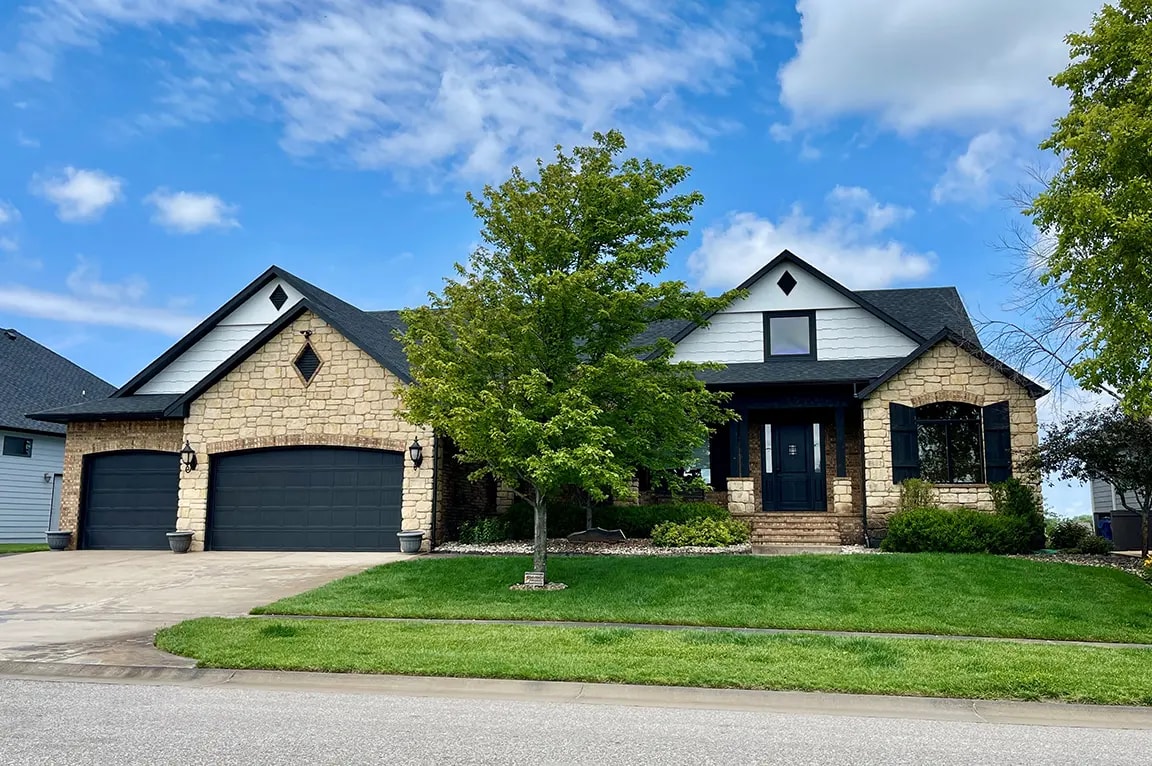
This stone-and-brick home in Wichita was built in 2010, and from the street it still looks the part of a newer build. But the windows and doors that came with it told a different story. The homeowner, a returning Pella customer, is working through a phased replacement of the original builder-grade windows one section of the house at a time, and this round covered a front window, a side window and the back patio door.
Why a Newer Home Already Needed Its Windows Replaced
Builder-grade windows are typically chosen to hit a price point during construction, not necessarily to perform well over the long run, and by year fifteen the gap between what a production window can do and what a homeowner actually wants often starts to show up as drafts, fogging, or hardware that no longer operates smoothly. That was the case here. Even though the home itself has held up well, the original windows were falling behind, and energy efficiency was the main reason the homeowner wanted them replaced.
Fiberglass Casement and Picture Windows Built for the Kansas Climate
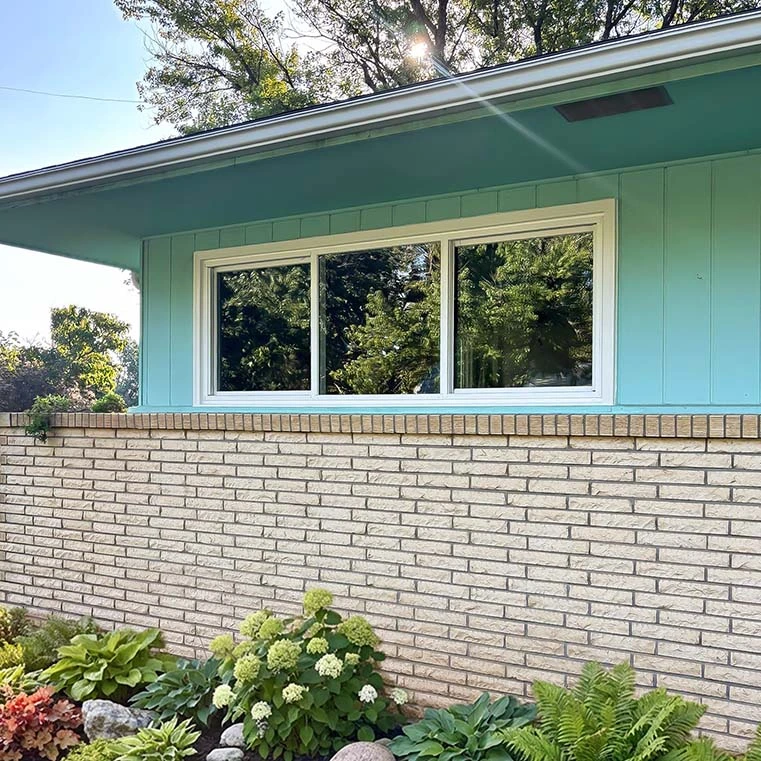
The front and side windows were replaced with fiberglass casement and picture windows, built from Duracast, Pella's proprietary fiberglass composite. Fiberglass expands and contracts at close to the same rate as glass, which helps the seal around the glass hold up over time instead of degrading the way some other frame materials can. Both windows are finished in black on the exterior with a white interior, a two-tone combination that reads as a deliberate style choice against the home's stone and brick exterior rather than a straight black-on-black or all-white window.
The picture window is a factory-mulled combination unit — two fixed rectangular sections paired with an arched unit above, joined together at the frame during manufacturing so the whole assembly performs as a single opening rather than three separate windows bolted together on site. That's the kind of detail that lets a large arched window keep clean sightlines without the water and air-infiltration issues that can come from field-joining glass units after the fact. The casement window uses Pella's Easy-Slide Operator hardware, which lets the sash open with a simple slide rather than a hand crank, and both windows carry Low-E insulating glass with argon gas fill for the actual energy performance upgrade the homeowner was after.
A Fiberglass Patio Door for the Back Patio
The back patio access uses one of Pella's fiberglass doors rather than a traditional sliding glass door, finished in black on the exterior with a white interior to match the rest of the black-and-white palette running through the project. It's built with a composite frame and a black-finished sill, and the glass lite is fitted with integrated blinds between the panes, giving the homeowner privacy control without a separate blind or curtain mounted over the glass. The lockset is a multi-point design, meaning it engages the door frame at more than one point along its height rather than relying on a single point near the handle, which gives a swinging door like this one a more secure, even seal than a standard single-point deadbolt.
Using an entry-style door on a patio opening isn't unusual when a homeowner wants a true swinging door rather than a slider, and this one was installed to the same full-frame patio door standard Pella uses on its sliding units, so the surrounding opening gets the same attention to sealing and water management either way.
A Phased Approach That Fits the Homeowner's Timeline
Rather than replacing every window in the house in one project, the homeowner is working through the house in stages, prioritizing the openings that matter most in each phase. That approach spreads out both the cost and the disruption of a full-home replacement, while still letting each phase use the same black-and-white finish so the house reads as a consistent, finished look no matter which phase is complete at any given time. For a returning customer already familiar with how the products perform, that kind of incremental plan is a practical way to replace an entire home's worth of underperforming windows without doing it all at once.
Thinking about next steps?
Whether you’re exploring ideas or ready to talk details, we’re here to help. Schedule a consultation—or sign up for inspiration and real-home insights from Pella.